
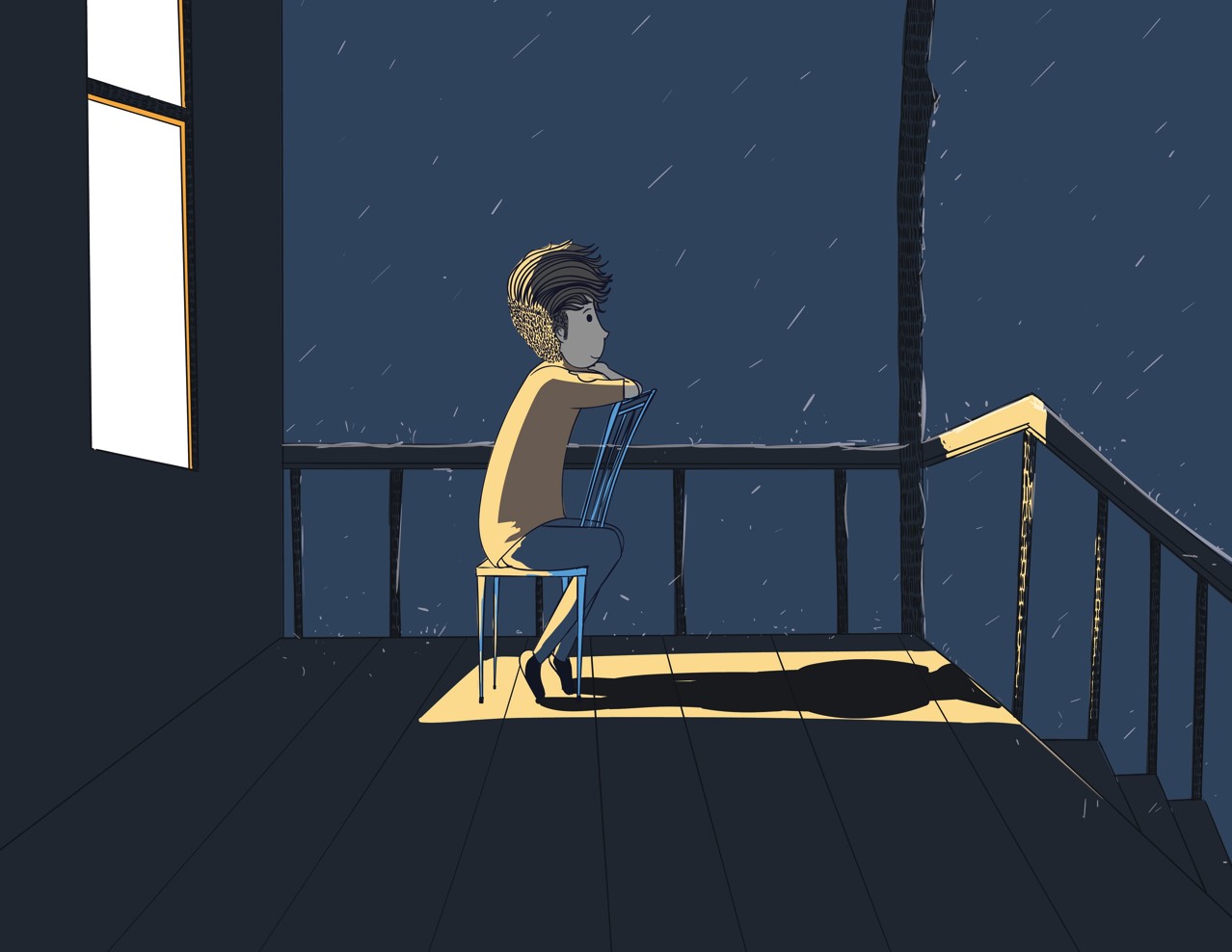
Loneliness inside a relationship feels different from ordinary loneliness. Two people can share a bed, a home, and years of history, while one quietly feels unseen. The question why do I feel lonely in my relationship often surfaces first. It shows up most in relationships that look stable from the outside. Nothing dramatic has to happen before it begins. Distance builds quietly, through small withholdings and unanswered bids for closeness. Neither partner necessarily intends the harm. Small withholdings simply accumulate faster than either partner notices.
This kind of loneliness has a name in research and a face in cinema. Michael and Kay Corleone, the central couple of The Godfather films, offer one of cinema’s clearest portraits of relational loneliness. Their marriage shows how secrecy, control, and silence hollow out a partnership from within. Peer-reviewed research on relational loneliness runs alongside their story throughout this piece. Two clinical approaches follow: Relational Life Therapy and Discernment Counseling. The goal throughout stays practical: naming the pattern clearly enough to interrupt it.
Why Do I Feel Lonely in My Relationship? Defining Relational Loneliness
Loneliness is not simply the absence of other people. Researchers define it as a gap between the connection a person wants and the connection a person actually feels. This gap can open inside a marriage just as easily as it opens in isolation.
Solitude and relational loneliness differ sharply, despite looking similar from outside. One involves physical distance a person actually wants. The other involves emotional distance nobody chose on purpose. That gap often hurts more precisely because a partner sits right there, unreachable.
A 2023 study on daily life within romantic partnerships reached a clear conclusion. Partners can feel fully connected or fully alone depending on relationship quality, not relationship status. Simply having a partner does not prevent this experience on its own.
Clinicians hear the question why do I feel lonely in my relationship from clients who are not considering separation. Many still love their partner deeply. What they miss is a partner who sees them, chooses them, and reaches for them on an ordinary day.
Longitudinal research adds a warning here. Loneliness does not only result from a struggling relationship. It can also predict dissatisfaction later, for both partners, years down the line. Left unaddressed, one partner’s loneliness can erode a relationship slowly, over years.
Why Do I Feel Lonely in My Relationship? The Paradox of Feeling Alone While Partnered
Having a partner should, in theory, prevent loneliness. The research tells a more complicated story. Researchers developed a romantic loneliness scale that identifies four distinct threads inside this experience. These threads include persistent longing for closeness, sadness tied to disconnection, a sense of exclusion, and quiet feelings of inadequacy.
The same research describes something counterintuitive. Unmet emotional needs inside a relationship can produce a paradoxical rise in loneliness, despite a committed partner’s presence. Commitment alone does not satisfy the need for emotional reach. A partner has to actually meet the need, consistently, for the loneliness to ease.
Loneliness inside a relationship can also spread between partners. Momentary studies show one partner’s daily loneliness measurably predicts the other partner’s loneliness shortly after. Without attention, the feeling rarely stays contained to one side of the relationship.
Michael and Kay Corleone: Setting the Scene
Understanding Kay Corleone’s loneliness requires some background. Michael Corleone begins the story as an outsider to his family’s criminal business. He returns from war planning an ordinary life. Kay Adams, his college girlfriend, represents that ordinary life fully; she comes from outside the family’s world entirely.
An assassination attempt on Michael’s father changes his path. Michael steps in to protect his father, then never fully steps back out. He marries Kay once the immediate danger passes. From that point on, Michael draws a hard line between business and family. He insists the line protects her; in practice, it excludes her.
The Slow Exclusion of Kay Corleone
Over both films, Michael consolidates power as the new head of the family. He grows more secretive with each passing year. Kay asks direct questions about what he does and who suffers for it. Michael lies to her calmly, framing each lie as protection.
Research on relationships supports what Kay senses without proof. Perceived concealment signals exclusion to a partner, even when the secret’s content stays unknown. That perceived exclusion, not the secret itself, predicts falling trust and rising conflict over time.
Years later, in the sequel, Kay reveals she ended a pregnancy rather than raise another child inside the family’s violence. She calls it the only control left to her. The marriage ends soon after. Michael, unable to tolerate her defiance, later restricts her access to their children.
Kay’s private version of why do I feel lonely in my relationship formed slowly. It grew from years of physical presence paired with relational exclusion.
Why Do I Feel Lonely in My Relationship When Nothing Seems Wrong?
Many relationships reach this loneliness without any single dramatic betrayal. A quieter pattern usually does the damage instead. Researchers call one common version demand and withdraw. One partner raises a concern. The other partner avoids, deflects, or shuts down. Studies link this pattern to lower satisfaction across the lifespan.
Gender shapes this pattern more than most people expect. Research finds one version, where a woman raises concerns and a man withdraws, especially damaging to relationship quality. Kay’s repeated asking and Michael’s repeated retreat fit this pattern.
Secrecy creates a related but distinct kind of harm. A partner does not need to lie outright to trigger this loneliness. Simply sensing that something stays hidden can shrink felt closeness on its own. The Corleone marriage shows this pattern at its most extreme. Milder versions appear constantly in ordinary relationships. A withheld worry, an unexplained mood, or an incomplete account of the day can each trigger it.
For many people, why do I feel lonely in my relationship traces back to this. A demand meets a retreat, over and over, for years. Eventually, asking stops feeling worth it.
Everyday Signs of Relational Loneliness
Few relationships include a scene as dramatic as a closing door. The underlying pattern still shows up constantly, in smaller forms. A partner scrolls through a phone instead of answering a question honestly. Another partner gives short, technically true answers that leave the real story untold.
Evenings pass side by side without real contact. Partners stop asking hard questions because earlier ones led nowhere useful. Eventually, the relationship runs well logistically while feeling empty emotionally. The household still functions: partners pay bills, coordinate schedules, and manage daily life without much friction.
None of this requires cruelty or betrayal. It only requires two people quietly choosing distance over disclosure in each moment. The pattern rarely announces itself as a crisis. It simply accumulates, one avoided conversation at a time, until the relationship feels hollow from the inside.
The Gendered Roots of Relational Silence
Michael’s silence is not random. It reflects patterns researchers have studied for decades in men specifically. Psychologists call this socialized pattern normative male alexithymia: a learned difficulty naming and voicing emotion. Boys often receive less coaching in emotional language than girls receive growing up. The result follows many men into adult relationships.
Research links this restricted emotional expression to lower relationship satisfaction and greater fear of intimacy. The same study found communication quality suffers alongside both. This gendered pattern shapes far more couples than the Corleones alone.
Attachment, Suppression, and the Cost of Self-Reliance
Attachment research offers another lens on this loneliness. People high in attachment avoidance value independence and discomfort with closeness. They tend to deactivate their own emotional signals rather than share them with a partner.
A study of couples found this avoidance predicts lower psychological well-being through emotional suppression specifically. The pathway runs in a clear direction: avoidance leads to suppression, and suppression lowers well-being for the avoidant partner. Partners on the receiving end fare no better. Suppression from one side reliably leaves the other partner feeling shut out and unsupported.
Michael Corleone models this pathway with unusual clarity. His self-reliance reads as strength inside the family business. Inside the marriage, that same self-reliance reads as abandonment. Kay experiences his control as distance, regardless of his private intentions. Intention rarely determines impact in close relationships; impact determines it.
Attachment patterns form early, often in response to caregivers who were inconsistently available. They do not doom a relationship permanently, though. Awareness alone starts to loosen an avoidant pattern’s grip. Naming the pattern out loud interrupts its automatic nature.
Relational Loneliness Is Not the Same as Falling Out of Love
People constantly misread relational loneliness, even while experiencing it themselves. It can feel like falling out of love. Often, it signals something narrower and more solvable instead. Two people can want each other deeply while still missing each other daily.
Clinicians distinguish loneliness from incompatibility by looking at effort. A person facing incompatibility usually stops trying to reach their partner. Someone facing relational loneliness keeps reaching instead, repeatedly, often for years, without success. Kay Corleone illustrates the more of the second pattern. She never stopped asking Michael for honesty. Her loneliness reflected his unavailability, not any absence of love or effort on her part.
This distinction shapes treatment choice directly. Relational Life Therapy assumes enough love remains to work with. Discernment Counseling exists because that assumption sometimes needs testing, not automatic acceptance.
Why Do I Feel Lonely in My Relationship? What Openness Actually Repairs
Research on repair offers real hope, not just theory. A daily-diary study of couples linked greater self-disclosure and perceived partner responsiveness to higher relationship satisfaction. Partners who shared more, and felt heard in return, reported closer, steadier relationships over time.
This finding matters because it reverses the logic many of us may assume. Silence feels safer in the short term. Over time, it produces exactly the loneliness it tries to avoid. Small, repeated acts of honest disclosure rebuild the closeness that silence slowly erodes.
Michael Corleone never tested this. He chose control over disclosure at every turn, protecting Kay from the truth instead of sharing it with her. The Corleone marriage shows what happens when that choice repeats for decades: the distance becomes permanent, not temporary.
Relational Life Therapy: Accountability Over Withdrawal
Terry Real developed Relational Life Therapy as a direct approach to exactly this kind of loneliness. The model treats emotional withdrawal as a pattern to interrupt, not a personality trait to accept. It asks each partner to take real accountability for their contribution to the distance between them.
RLT identifies common defensive stances, or losing strategies: needing to be right, controlling, unbridled self-expression, retaliation, and withdrawal. Each strategy protects one partner in the short term while damaging the relationship over time. The pattern is recognizable across many relationships. Michael’s entire strategy with Kay amounts to controlled withdrawal that masquerades as protection.
The therapy is gender-conscious by design. It names how many men receive little training in emotional language, echoing the research above. The model also names how many women learn to over-function emotionally. They absorb more than their share of a relationship’s emotional labor. Neither pattern is fixed. RLT treats both as learned, and therefore changeable.
The model also describes relationships as cycling through three states: harmony, disharmony, and repair. Disharmony is not failure; every relationship moves through it regularly. The real skill lies in repair: recognizing the rupture and reaching back quickly. Therapists using this model name patterns in the room instead of waiting for clients to notice alone.
Rather than settling for peace at any cost, RLT pushes partners toward full-respect living. This means honesty, presence, and mutual accountability. It applies even when the truth feels uncomfortable. Applied to the Corleones, the model would ask Michael to trade secrecy for transparency, and control for genuine partnership. Relational Life Therapy treats the question why do I feel lonely in my relationship differently. It becomes a signal worth investigating together, not a verdict on the relationship’s worth.
When One Partner Leans Out: Mixed-Agenda Couples
Some relational loneliness reaches a harder crossroads. One partner wants to repair the relationship. The other partner has quietly checked out and doubts anything can change. Therapists call this a mixed-agenda couple, and standard couples therapy often fails them. Sessions assume both partners want the same outcome. When one partner secretly wants out, that assumption breaks down fast.
Researcher William Doherty and colleagues developed Discernment Counseling to address this impasse. The model runs for one to five sessions where each session blends joint conversation with individual time for each partner alone. This structure lets the counselor understand each partner’s private view honestly. Early findings describe the approach as promising for couples that standard therapy models often overlook.
Instead of pursuing repair immediately, it helps each partner gain clarity first. Couples leave with a clear choice among three paths. They can stay as they are, commit to six months of focused couples therapy, or separate.
This approach fits the Corleone marriage with uncomfortable precision. Kay spends years leaning in, asking, hoping. Michael never fully leans in or officially leans out; he simply controls the terms. Discernment Counseling’s approach to mixed-agenda couples might have forced an earlier reckoning, long before Kay’s confrontation in the sequel. For some couples, why do I feel lonely in my relationship tangles with something bigger. The real question becomes whether to stay at all. Discernment Counseling exists to help separate those two questions before either partner decides alone.
Throughout the process, the psychotherapist stays neutral about which path is best for the couple. That neutrality matters: couples trust the process more when they sense no hidden agenda toward saving or ending things.
Why Do I Feel Lonely in My Relationship? Moving Toward Repair
Relational loneliness rarely announces itself clearly. The Corleones show the extreme version. They weaponize secrecy, mistake control for love, and sacrifice honesty for power. Most couples never reach that extreme, but the underlying pattern often looks familiar.
Repair starts with a choice most people can actually make. Relational Life Therapy asks both partners to trade defensive strategies for real accountability. Discernment Counseling offers a structured way to find clarity when one partner has already leaned out. Neither approach demands perfection. Both simply ask for honesty over performance, and presence over control.
Recognizing relational loneliness early makes repair considerably easier. A single honest conversation about the distance often opens more than either partner expects. Waiting years, as Michael and Kay did, lets the pattern calcify into something harder to name and harder to reverse.
Kay Corleone never got that chance. She asked good questions for years and received calculated answers instead of real ones. Her story stands as a warning, not a life sentence for anyone facing a similar pattern. Relational loneliness responds to attention, disclosure, and consistent repair, especially with the right clinical support.
Turning Toward Patterns Together
Every pattern described here shares one thread: avoidance feels protective in the moment and costly over time. Silence protects against short-term discomfort while it quietly starves the relationship of what it needs. Secrecy protects against difficult conversations while it teaches a partner not to trust the relationship with anything real. The protection is real. So is the cost.
One honest answer begins to shift the pattern. Consistency over months matters more than any single dramatic conversation.
If you and your partner are trying to understand why one or both of you feel lonely inside your relationship, we’re here to help. Book an appointment here or contact us with any questions. And if you’d like a clearer picture of what a healthy relationship looks like without defensiveness or combat, read here about vulnerability.
Answering why do I feel lonely in my relationship starts with turning toward the pattern together, not further away.