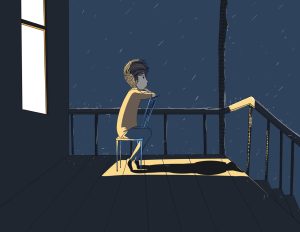

Belle walks into a castle and falls in love with something dangerous. Fear and tenderness can coexist in the same relationship, and audiences can rarely notice the difference. Countless people quietly ask themselves how to know if my relationship is unhealthy. The answer usually starts as a feeling in the body, well before anything else.
Beauty and the Beast gives that feeling a shape. A locked castle holds a temper that flashes without warning. Inside it, a woman learns to read a room before she speaks. Popular memory treats it as a love story. The actual content is a case study in fear, secrecy, and the myth that love alone can rewrite someone.
This piece looks at three patterns hiding inside the fairy tale. Fear without physical altercations counts as one. Secrecy that isolates counts as another. So does the belief that devotion alone can transform a dangerous partner. A fourth pattern, drawn from research on healthy couples, shows what real repair actually looks like. None of these patterns depend on which partner happens to be male.
Fairy tales work as cultural scripts. They teach us, long before we ever date anyone, what love is supposed to look like when it survives hardship. That teaching becomes an issue when the danger itself gets romanticized instead of named.
The story asks whether Belle’s love is strong enough to survive the castle. It never asks whether the castle itself is safe. That question, flipped around, serves anyone standing inside a real relationship today far better.
The research below draws on coercive control theory, traumatic bonding, isolation studies, and decades of research on repair between healthy couples.
How to Know If My Relationship Is Unhealthy: When Fear Lives in the Room
The Beast’s voice does the damage. A door slams somewhere in the castle. The west wing of the castle echoes with a roar. Certain rooms stay off limits without any explanation given. This becomes the daily routine. Belle learns the castle’s rules before she learns anything else about him. She tracks his moods closely and adjusts before he speaks.
Most people who search for this exact phrase already sense something is wrong. A feeling arrives first, long before proof does. That feeling deserves real investigation.
This pattern sits at the center of coercive control research. For decades, work on abuse centered almost entirely on visible injury. A 2019 review in Violence Against Women argues that focusing on physical incidents alone hides a wider structure of control. Evan Stark and Marianne Hester describe how that narrow focus let a whole category of harm go unnamed for years. A credible threat of harm, they argue, can organize behavior almost as effectively as harm itself.
What Coercive Control Actually Includes
Coercive control describes an ongoing pattern. It includes intimidation, monitoring, and rules enforced through mood. The west wing shows this clearly. Belle receives one explicit rule and an implicit threat behind it, and that combination does most of the controlling.
A raised voice changes behavior, or a fist against a wall does the same. So does an object thrown across a room. The nervous system starts protecting itself before any contact happens.
Belle never gets struck. She still flinches and calculates before she speaks. Her voice still adjusts to match his mood before either of them says a word. That response begins to answer the question of how to know if my relationship is unhealthy better than any visible mark could. Safety is not only the absence of violence. It is also the absence of a standing threat.
Fear organizes behavior quietly, through small adjustments. A softer tone here, a delayed request there, a habit of checking a mood before opening a door. Over time, those adjustments start to feel normal. That normalization deserves attention.
The Symptoms Fear Leaves Behind
Fear like this shows up in the body, even when nothing visible happens on the outside. It shows up as tension that never fully resolves. It shows up as a kind of vigilance that never quite switches off. A few honest questions can help bring that pattern into view.
None of these symptoms show up on the outside. A colleague might see someone composed at work while the body runs on high alert for hours.
Do you feel a flicker of dread before your partner walks through the door? Does their tone tell you which version of them arrived tonight, before they say a word? Have you caught yourself rehearsing your own sentences before you say them out loud? Do your shoulders finally drop only once they calm down, after holding tension the whole time?
These questions cannot diagnose anything by themselves. They can make an invisible pattern visible enough to examine honestly.
How to Know If My Relationship Is Unhealthy: Belle’s Locked Door
Belle’s father rides away alone. The castle keeps her, and distance does the rest of the work. She cannot easily reach anyone who knew her before the roses and the curse. Her whole social world narrows to a handful of enchanted objects and one volatile man.
Talking clocks and candlesticks fill the silence where friends used to be. Their warmth feels real inside the story. None of them can walk Belle back to the village.
This matters because outside perspective often catches what a person inside a relationship cannot. A friend notices a joke that lands wrong, or a parent notices a voice that has changed. Once those observers disappear, the person left behind loses an early warning system without ever choosing to. Without that outside view, how to know if my relationship is unhealthy becomes a much harder question to answer.
The Research on Isolation
Isolation usually arrives disguised as protection, or as the ordinary shrinking of a world under pressure. A 2025 study examined social networks among women experiencing intimate partner violence. It found their networks were noticeably smaller than those of women without that experience. Restricted contact shrinks the circle. Monitored communication does too. So does self-imposed withdrawal from shame. Most existing research on this topic has focused on women. The isolating mechanism itself applies regardless of gender.
A 2021 rapid review in Frontiers in Psychiatry linked social and geographical isolation to intimate partner violence across dozens of studies. Distance from family and friends removes more than company. It removes the outside eyes that might name a pattern the person inside it cannot yet see for themselves. A closed system, whether a castle or a household, tends to generate its own private logic. Inside that logic, warning signs stop registering as unusual.
Systemic thinking treats a relationship as its own small ecosystem. When outside input disappears, that ecosystem loses its checks. Whatever grows inside it, healthy or not, grows without correction.
Even affection can function as monitoring in disguise. A partner who always wants to know where someone is may frame that habit as devotion. Research on coercive tactics treats constant tracking as a control behavior, regardless of the warmth wrapped around it.
Isolation exists on a spectrum. A gradual drop in phone calls counts. So does a slow fade in invitations. Small shifts, tracked honestly over months, often reveal a lot.
Carrying It Alone
Nobody in the village knows what happens behind those castle walls. Belle carries the whole story by herself, and that weight changes how she moves through each day. Shame does specific work inside unhealthy relationships, quietly reinforcing the silence around them.
Researchers studying coercive control describe a manipulation pattern built on shame. A partner induces guilt through shame, then uses that guilt to keep a person close and quiet. Secrecy is part of what holds the relationship together in the first place. Interestingly enough, if a partner cannot trust that they can share some wrong they’ve done, the shame can play on their guilt to remain indebted to the unhealthy relationship.
Shame works differently from guilt in this context. Guilt says a specific action was wrong. Shame says the whole person is somehow at fault, which makes confiding in anyone feel unbearable. That distinction explains why so many people stay quiet even when they suspect something is wrong.
This is where the question of how to know if my relationship is unhealthy gets harder to answer alone. Isolation removes the friend who might ask a hard question over coffee. It removes the sibling who might notice a flinch across a dinner table. Without an outside perspective, patterns start to look like simply how things are.
Disclosure interrupts that isolation, even in small doses. Saying one true sentence out loud to a trusted person can loosen shame’s grip almost immediately. That is precisely why secrecy gets protected so fiercely inside these dynamics.
Belle tells no one. The questions worth asking sound like this: Have you stopped mentioning your partner to the people closest to you? Do you rehearse a version of events before anyone even asks how you are doing? Does saying the truth out loud feel more frightening than staying quiet about it? Have you noticed how alone this feels, even standing in a full room?
How to Know If My Relationship Is Unhealthy: Waiting for the Beast to Change
Belle’s love changes the Beast. That is the version everyone remembers, and it is the most dangerous part of the story. Real relationships rarely work this way, however satisfying the fantasy feels.
Donald Dutton and Susan Painter’s research on traumatic bonding found something counterintuitive about attachments like this one. Power imbalance combined with intermittent kindness deepens emotional attachment. The Beast’s rare moments of gentleness likely bind Belle tighter, precisely because they feel so hard won.
This explains why the fairy tale feels emotionally true even though it is clinically false. Intermittent warmth after fear creates a stronger pull than steady kindness ever could on its own. The bond itself gets mistaken for proof that change is already underway. Anyone asking how to know if my relationship is unhealthy must learn to separate the feeling of love from actual evidence of change.
Many people in real relationships describe a version of this same hope. They remember one period when things genuinely improved, and they credit their own patience for it. That memory becomes evidence, even when the underlying pattern never actually shifted.
Popular culture repeats this pattern well beyond one animated film. The love interest broods. There’s a dangerous edge to them. Devotion is supposed to soften it eventually. Audiences reward this same arc again and again. That repetition can train an expectation most people never consciously examine.
Where hope gets aimed matters more than whether it exists. A single gentle evening gets treated as proof. Months of volatility, meanwhile, get quietly filed away as the exception.
What the Story Conveniently Leaves Out
The Beast never enters a program. He never sits with anyone who holds him accountable outside of Belle’s affection. His entire transformation happens off the page, in private, guaranteed only because the plot requires it.
Researchers who study real behavior change tend to agree on one thing. A 2016 review in BMJ Open examined how batterer treatment programs actually produce change in participants. Change comes from structured mechanisms: accountability, monitoring, and sustained practice. It does not come from a partner’s devotion. Love was never the intervention, no matter how any story frames it.
Real accountability means showing up every single week. Direct feedback becomes normal, even from people not invested in protecting them. None of that fits neatly into a montage.
Change stays possible, but it requires far more than the story lets on. That effort has to be sought out and repeated, long after Belle stops watching. Supporting someone through this does not mean carrying their transformation alone. That distinction protects both people in the long run. This gap answers how to know if my relationship is unhealthy just as clearly as any single incident could.
Some questions cut through that fantasy fairly fast: Do you find yourself defending your partner before anyone even accuses them of anything? Are the apologies starting to sound the same as the last one they gave? Does the calm always seem to arrive right before you think about leaving? Have you started calling a single good moment real progress?
How to Know If My Relationship Is Unhealthy: What Real Repair Looks Like
Couples who thrive still fight, sometimes often, but they consistently find their way back to each other afterward. That return trip matters more than most people realize.
John Gottman and Janice Driver studied how couples move through conflict in ordinary, everyday marriages. Repair attempts, the small gestures that de-escalate tension mid-argument, predicted long-term stability better than the conflict itself did. A joke counts. An apology counts too. So does taking responsibility for something specific. Their research also found that these attempts work best when both partners actually accept them.
A repair attempt can look almost embarrassingly small in the moment. It might sound like naming tension directly, or asking for a short pause before continuing. An unprompted apology counts too, offered before anyone demands one. Mutual willingness makes a repair attempt powerful, regardless of its size.
This is the real test hiding behind how to know if my relationship is unhealthy. Healthy partners repair without demanding a rescue first. Neither one waits for the other to earn safety through good behavior. The Beast never learns to do this on his own, inside the story or outside it. Every repair in the tale flows through Belle, never from him back toward her.
A relationship where only one partner ever repairs anything carries its own warning sign. That imbalance quietly answers how to know if my relationship is unhealthy almost as clearly as fear does. Repair belongs to both people, or it is not really repair at all.
Naming What Safety Requires
Repair only works when both people choose it, again and again, long after the initial spark fades.
Safety planning can start small: a trusted contact, a private conversation, a plan for what happens if the pattern continues. None of that requires certainty about the future, or an immediate decision to leave.
Some questions point toward what a next step might actually look like: What would safety look like for you, starting today rather than someday? Who is one person you could tell the truth to this week? Does real repair feel possible right now, or does it only feel like waiting? Would you know what to ask for if you decided to reach out?
Safety Is Priority, Not Redemption
Beauty and the Beast ends with transformation. That ending works well for fiction, because fiction can guarantee outcomes real life can’t. Real life offers evidence, gathered slowly, one day at a time. A story only needs one ending to feel true. A relationship needs thousands of ordinary days to prove itself.
A relationship does not owe anyone a happy ending. Belle’s safety while she waited mattered more than whether the Beast could change.
That shift answers how to know if my relationship is unhealthy more honestly than any checklist could. Safety, right now, matters more than fixability ever did. Fear, secrecy, and a story about love completing someone else’s unfinished work do not belong in a healthy relationship, however the story eventually ends.
Three threads run through this story. Fear can operate without ever becoming visible. Secrecy can quietly do an abuser’s work for them. Change, when it is real, comes from structured effort. Naming these threads can make the present moment easier to see clearly, even without rewriting anyone’s ending.
Stories exist to be borrowed. This one is worth borrowing carefully. No fairy tale can make that determination for anyone. Only a closer, honest look at the actual pattern can do that work. Luceris welcomes questions about this. An appointment offers a private space to talk through what a relationship actually looks like.
Free, confidential support is available across Ontario by calling 211, day or night. It can connect anyone to the right local resource, regardless of gender.