
How to stop resenting my partner is one of the most common questions we hear in session. Most people arrive expecting a single culprit: one betrayal, one broken promise, one unforgivable moment. The real answer is rarely that simple. Resentment almost always builds from many small, unaddressed hurts rather than one dramatic wound. William Shakespeare’s Macbeth, written four centuries ago, maps this exact pattern with startling clinical precision.
This post works through resentment in two parts. First, we look at what resentment actually is. Then we cover how it shows up day to day and what it slowly does to a relationship. Macbeth and his wife then take center stage. Their marriage offers one of literature’s clearest pictures of unrepaired emotional injury. That story ends in catastrophe. Most real relationships do not have to follow them there.
How to Stop Resenting My Partner Starts with Naming the Emotion
Resentment differs from anger in one important way: anger arrives and often leaves, while resentment settles in and stays. Anger tends to spike in response to a specific moment and then fade once that moment passes. Resentment behaves more like sediment. Each new hurt drops to the bottom and adds to a layer that never fully washes away. Over months or years, that sediment hardens into a fixed, mostly negative view of a partner.
Clinically, resentment often functions as anger that never found a safe way out. A need went unmet, or someone crossed a boundary, and no repair followed. Instead of addressing the moment directly, the hurt partner swallows it and moves on. That swallowed reaction does not disappear. It waits, and it accumulates weight with each repetition.
How we interpret a partner’s behavior matters just as much as the behavior itself. Vangelisti and Young found that people experience deeper, longer-lasting hurt when they believe a partner acted on purpose. We read a missed anniversary as thoughtlessness or as a deliberate insult, and the second interpretation stings far more. Over time, we tend to reinterpret ambiguous moments as intentional, which only accelerates the buildup.
Research on hurt feelings backs this up. Vangelisti and colleagues studied how people explain their own hurt in close relationships. They found recurring, often small causes: feeling criticized, feeling ignored, feeling unimportant to a partner. None of these alone would end a relationship. When they repeat often enough, though, they add up to something much heavier. Learning how to stop resenting my partner starts with recognizing this difference between anger and resentment.
The Signs Resentment Leaves Behind
Resentment rarely announces itself directly. It shows up sideways, through behavior that looks smaller than the feeling driving it. Sarcasm replaces direct requests. A partner keeps a private, running tally of who did more chores or who apologized last. Compliments start to feel effortful rather than automatic.
Withdrawal often follows. A partner stops sharing the small details of a day. This is not from busyness. It comes from a quiet decision that sharing no longer feels worth it. Silence replaces conflict, which can look like peace from the outside. Underneath, though, silence often means one partner has stopped expecting anything to change.
Physical affection often fades next, quietly and without discussion. A partner might flinch away from a touch that once felt easy, or stop initiating it altogether. Small acts of generosity dry up too. Partners offer fewer favors, extend less patience, and give less benefit of the doubt. None of these signs guarantee resentment on their own. Together, though, they describe its shape fairly well.
What Unspoken Resentment Does to a Relationship
Unaddressed resentment does more than create distance. It changes how each partner interprets the other’s behavior. Hawkins, Carrère, and Gottman studied this shift directly. They found that couples carrying negative feelings toward each other start reading neutral or even kind actions as hostile.
We read a late partner as inconsiderate instead of simply stuck in traffic. A dish left in the sink becomes proof that a partner does not care, rather than an honest oversight. This bias becomes self-reinforcing. Once it takes hold, positive gestures struggle to register at all, so resentment keeps finding new evidence to feed itself.
This cycle rarely stays limited to arguments about dishes or schedules if nobody addresses it. It seeps into decisions about intimacy, shared plans, and how much of a life partners still want to build together. Many couples do not recognize how far the drift has gone until one partner starts imagining life without the other.
This is why couples in long-standing resentment often say the relationship feels unsalvageable, even when nothing catastrophic has happened recently. The catastrophe already happened, just slowly, in pieces too small to name individually. Shakespeare understood this decay long before modern researchers measured it.
The Story, Briefly
A short summary helps before going further. Macbeth is a Scottish general who meets three witches on a battlefield. They prophesy that he will become king.
Ambition, and his wife’s encouragement, push Macbeth to murder King Duncan and seize the throne. Guilt and paranoia follow immediately. Macbeth grows convinced that others threaten his power, and he orders more killings, including his friend Banquo’s murder. Lady Macbeth, who once pushed hardest for the crown, eventually breaks under the weight of what they have done. The play ends with both of them undone: one by guilt, one by war.
A Partnership Forged in Ambition
Shakespeare gives us almost no courtship. We meet the Macbeths already fused, already speaking a private language of ambition. Macbeth writes to his wife before he writes to anyone else, calling her his “dearest partner of greatness.” She reads his letter and immediately starts planning, finishing his thought before he arrives home.
When Macbeth hesitates over killing Duncan, she does not comfort him. She challenges his manhood instead, asking what beast made him share the plan if he meant to abandon it. This is not tenderness. It functions, in this moment, as attunement: she meets his fear with total engagement, even if the engagement is harsh. Two people move as one unit toward a single, terrible goal. For one night, at least, neither partner works alone.
The Moment of Exclusion
The shift arrives quietly, without a single raised voice. After Duncan’s murder, Macbeth grows secretive and increasingly paranoid about Banquo, a friend he now fears. He tells Lady Macbeth only that his mind is full of scorpions. When she asks what he plans to do about it, he refuses to say. “Be innocent of the knowledge, dearest chuck,” he tells her, “till thou applaud the deed.”
He calls her by an endearment while shutting the door on her. She had been his co-conspirator, his equal, his partner in crime. Now she becomes someone he manages and protects from the truth. Nothing about this moment looks like abuse. It looks, on its surface, almost like kindness. But Lady Macbeth needed his trust at the exact moment he chose to trust no one but himself.
How to Stop Resenting My Partner When the Root Is an Attachment Injury
Emotionally Focused Therapy gives this exact pattern a name: attachment injury. Johnson, Makinen, and Millikin define it simply. One partner needed comfort or inclusion; the other withdrew instead. The betrayal does not need to be dramatic. Exclusion during a moment of real need does the damage on its own.
Once this happens, the injured partner starts using the incident as a permanent measure of the other’s trustworthiness. That single moment then colors every conflict that follows. We see this exact mechanism in the Macbeths’ marriage after Banquo’s murder. Lady Macbeth cannot fully trust her husband again, even as she urges him to let go of his guilt. The injury sits underneath every later scene, unspoken and unresolved.
This is the mechanism behind most resentment. It comes not from one loud betrayal but from a series of quiet moments. A partner needed us, and we chose distance instead. The honest answer to how to stop resenting my partner often traces back to one of these injuries.
Two People, Alone Together
Neither Macbeth nor Lady Macbeth processes their guilt with the other. She carries hers into sleep, scrubbing at stains only she can see. “Out, damned spot,” she mutters, reliving Duncan’s murder alone in the dark. Her waking mind cannot bear what her unconscious mind will not release.
Macbeth, meanwhile, hardens. He stops asking for her counsel and starts acting alone, ordering murders she never approved and sometimes never learns about. Each partner suffers a private, escalating crisis. Neither offers the other comfort, and neither asks for it.
Research on unforgiveness in couples links this pattern to anxious attachment. When partners stop believing comfort is available, they stop reaching for it. Beltrán-Morillas and colleagues studied infidelity in romantic relationships. They found that negative affect and anxious attachment predict unforgiveness. The Macbeths hold on to theirs until holding on replaces the relationship itself.
Tomorrow and Tomorrow: The Cost of Unrepaired Hurt
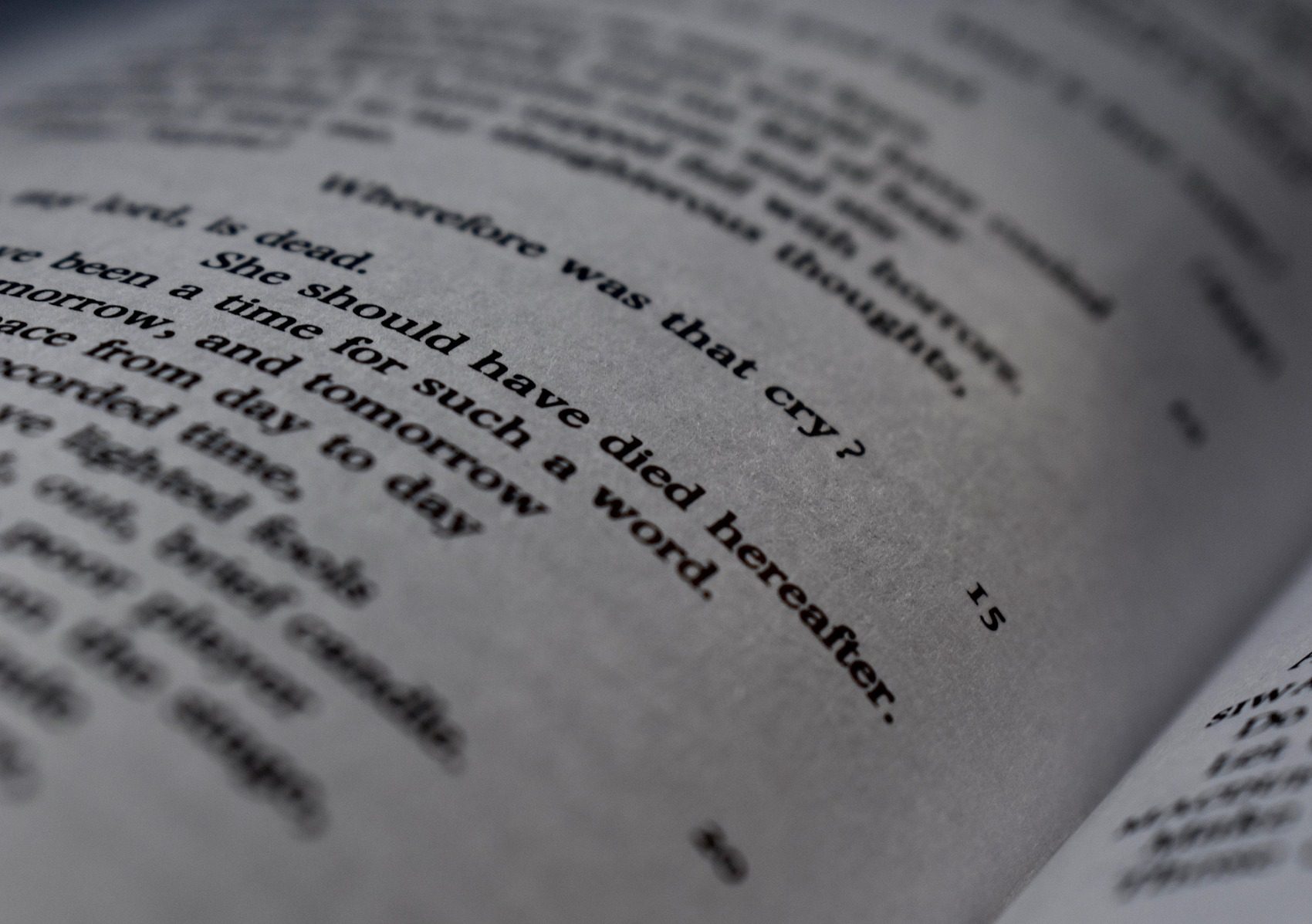
By the play’s final act, the Macbeths barely interact at all. When a servant tells Macbeth that his wife has died, he does not rush to her, weep, or ask how. He simply says, “She should have died hereafter; there would have been a time for such a word.”
What follows is one of literature’s bleakest speeches. Macbeth describes tomorrow creeping in “this petty pace from day to day” toward “dusty death.” He calls life “a tale told by an idiot, full of sound and fury, signifying nothing.” Scholars still debate whether this response hides grief or simply lacks it.
Either reading supports the same clinical point. Years of unaddressed injury and isolation had numbed Macbeth long before this scene arrives. Chronic, unrepaired hurt does not just damage a relationship. It can flatten a person’s entire capacity to feel connected to anyone. That includes the woman he once called his dearest partner of greatness. Their story shows what happens when nobody learns how to stop resenting my partner in time.
How to Stop Resenting My Partner Through Emotionally Focused Therapy
The Macbeths never get a chance to repair what breaks between them. Real couples get exactly that chance, and Emotionally Focused Therapy builds a specific path toward it. Makinen and Johnson tested a repair process called the Attachment Injury Resolution Model. In it, the partner who caused the injury learns to stay emotionally present while the other describes the pain.
This is harder than it sounds. Most people want to defend themselves or rush toward apology and moving on. The model asks the offending partner to slow down and simply feel the impact instead. In turn, the injured partner risks naming a need that once felt too dangerous to say aloud.
In practice, this can sound simple and still feel enormous. One partner might finally say, “I needed you to trust me that night, and you didn’t.” The other partner’s task is not to explain, defend, or rush to fix it. It means staying present with what that cost the other person, without flinching away from it.
Zuccarini and colleagues found that couples who complete this process engage more deeply with their own emotions during sessions. They also respond to each other with more warmth throughout the repair. Halchuk and colleagues followed couples for three years after treatment and found the changes held. Trust, closeness, and the resolution of the original injury all remained stable over time.
Resentment loses its grip once both partners finally turn toward the wound together instead of away from it. Emotionally Focused Therapy offers a real, tested answer to how to stop resenting my partner.
How to Stop Resenting My Partner: Where Real Repair Begins
Macbeth’s tragedy works because the ending feels inevitable, but real relationships are not tragedies with fixed scripts. Every accumulated hurt begins as a moment when someone needed a partner and did not get them. We can still find that moment and name it, even years later.
Emotionally Focused Therapy gives couples language for injuries that have gone unspoken for a long time. It also gives the offending partner a way back in, one that does not require perfect words, only real presence. At Luceris, we support couples through exactly this kind of repair. We use Emotionally Focused Therapy to work through injuries that have hardened into distance.
Resentment convinces us that the distance is permanent. Shakespeare’s tragedy shows what happens when we believe that story all the way to the end. The real answer to how to stop resenting my partner is rarely dramatic. It starts with naming one small, unhealed moment, and choosing to turn back toward it. Most couples never have to find out.
Resentment loses its grip the moment it’s spoken instead of carried alone. For more on the vulnerability underneath it, check this out; questions are always welcome at Luceris, and booking a session takes just a few minutes when it’s time to start.